How to Decorate with Primitive Furniture: Blending Antique Character with Modern Style
Primitive furniture isn't just for country homes. Discover how handcrafted antique cupboards, harvest tables, blanket chests, and other primitive pieces can add warmth, character, and history to modern, farmhouse, traditional, industrial, and eclectic interiors. Learn simple design tips for blending old and new while creating a home that's both timeless and uniquely yours.
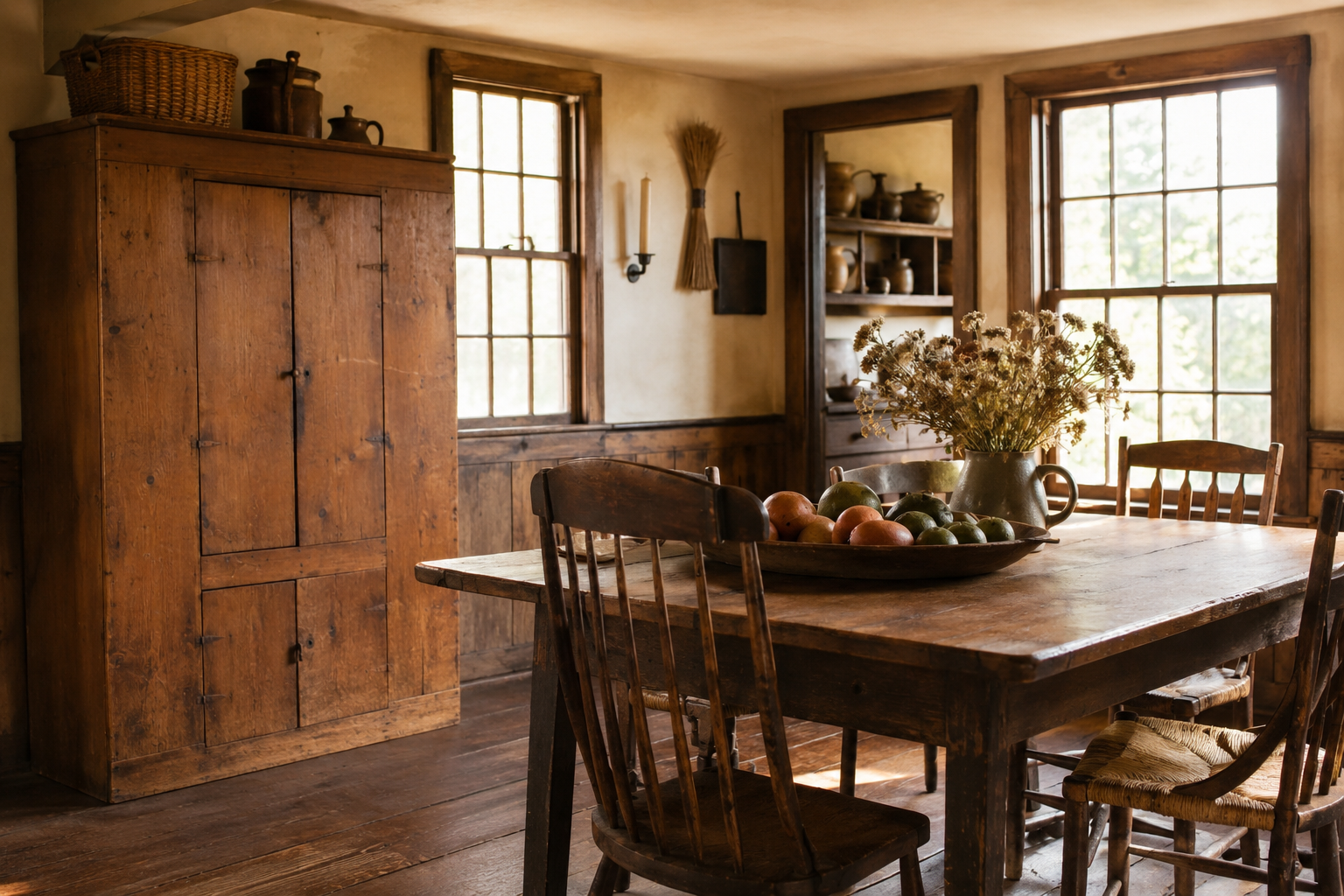
What Is Primitive Furniture?
Primitive furniture has experienced a resurgence in recent years, and for good reason. In a world filled with mass-produced furnishings, handcrafted primitive pieces bring authenticity, warmth, and a sense of history that simply can't be replicated. Whether it's a weathered pine cupboard, a handmade harvest table, or a simple Shaker-style bench, these pieces tell stories that span generations.
One of the biggest misconceptions about primitive furniture is that it only belongs in an 1800s farmhouse. In reality, authentic primitive pieces are some of the most versatile antiques you can decorate with. They blend beautifully with contemporary, industrial, mid-century, traditional, farmhouse, and eclectic interiors.
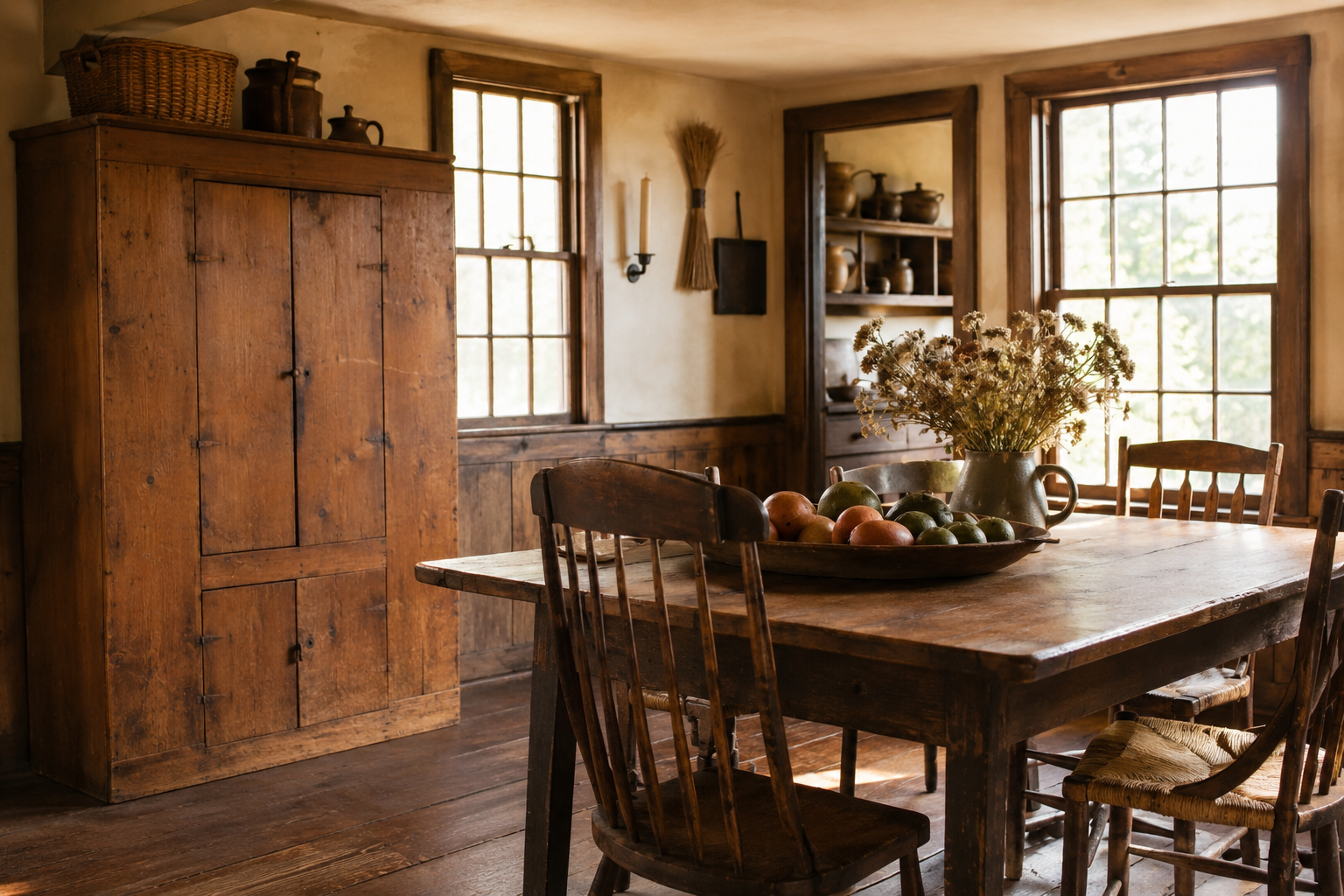
Primitive furniture generally refers to handcrafted pieces made with function first and ornament second. Early American settlers and rural craftspeople built furniture using locally available woods and straightforward joinery techniques. Rather than striving for perfection, these makers valued durability, practicality, and usefulness.
Common characteristics of primitive furniture include:
- Solid hardwood construction
- Visible hand-tool marks
- Natural patina developed through years of use
- Simple, functional silhouettes
- Warm, earthy finishes
- Pegged joinery and handmade details
These imperfections are exactly what make primitive furniture so appealing today. Every worn edge, old repair, and uneven surface contributes to the history and individuality of the piece.
Primitive + Modern
One of the easiest ways to decorate with primitive furniture is to pair it with clean, modern lines.
Imagine a sleek white kitchen with an antique dough bowl filled with seasonal greenery, or a primitive farmhouse table surrounded by contemporary black dining chairs. The contrast allows both the old and new elements to stand out.
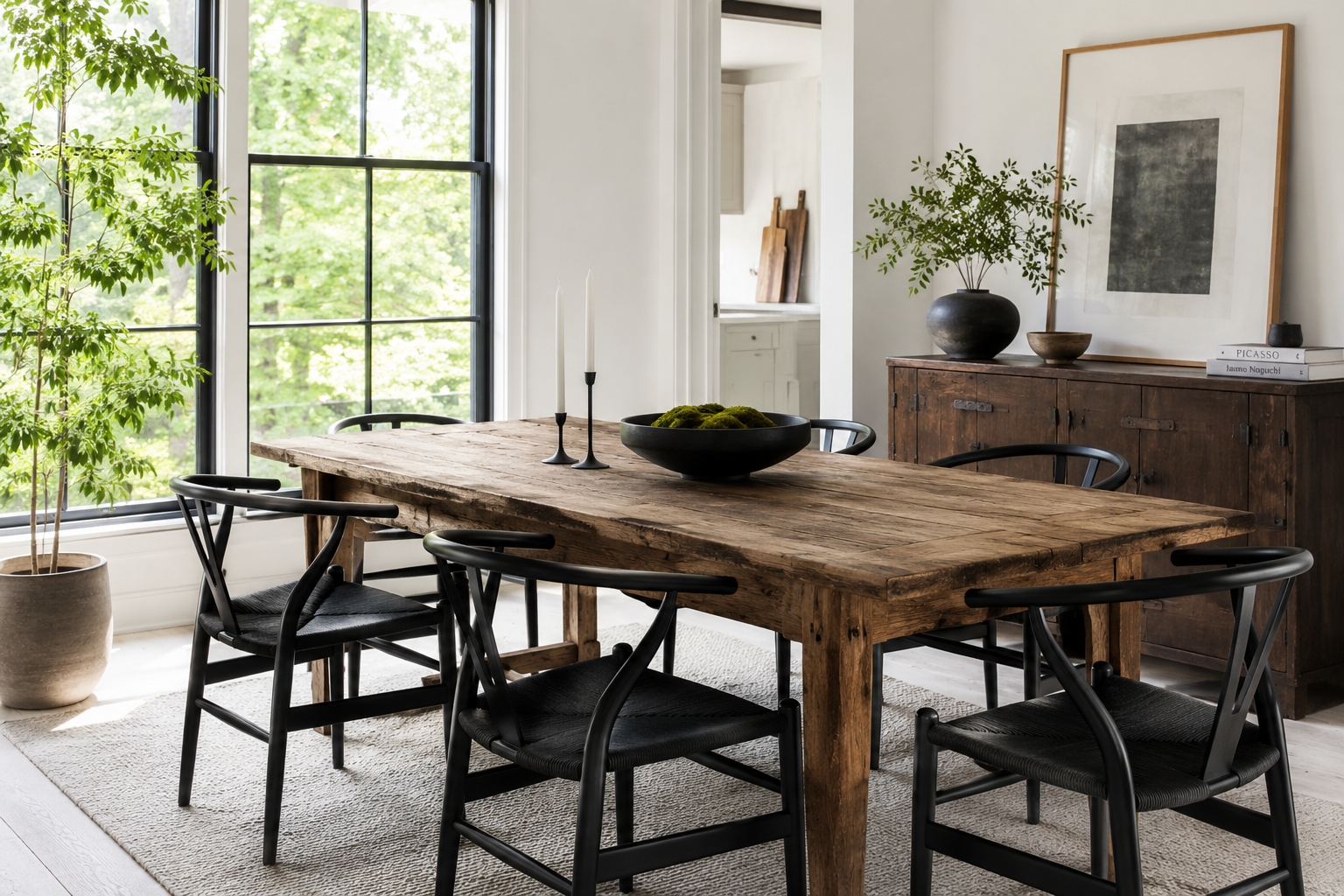
Modern interiors often benefit from the warmth and texture that antique wood brings. A single primitive piece creates contrast, softens clean lines, and gives the space a more collected, lived-in feeling.
- Keep surrounding colors neutral.
- Let one primitive piece become the focal point.
- Mix wood tones instead of trying to match everything.
- Pair rough, aged surfaces with smooth, modern finishes.
Primitive + Farmhouse
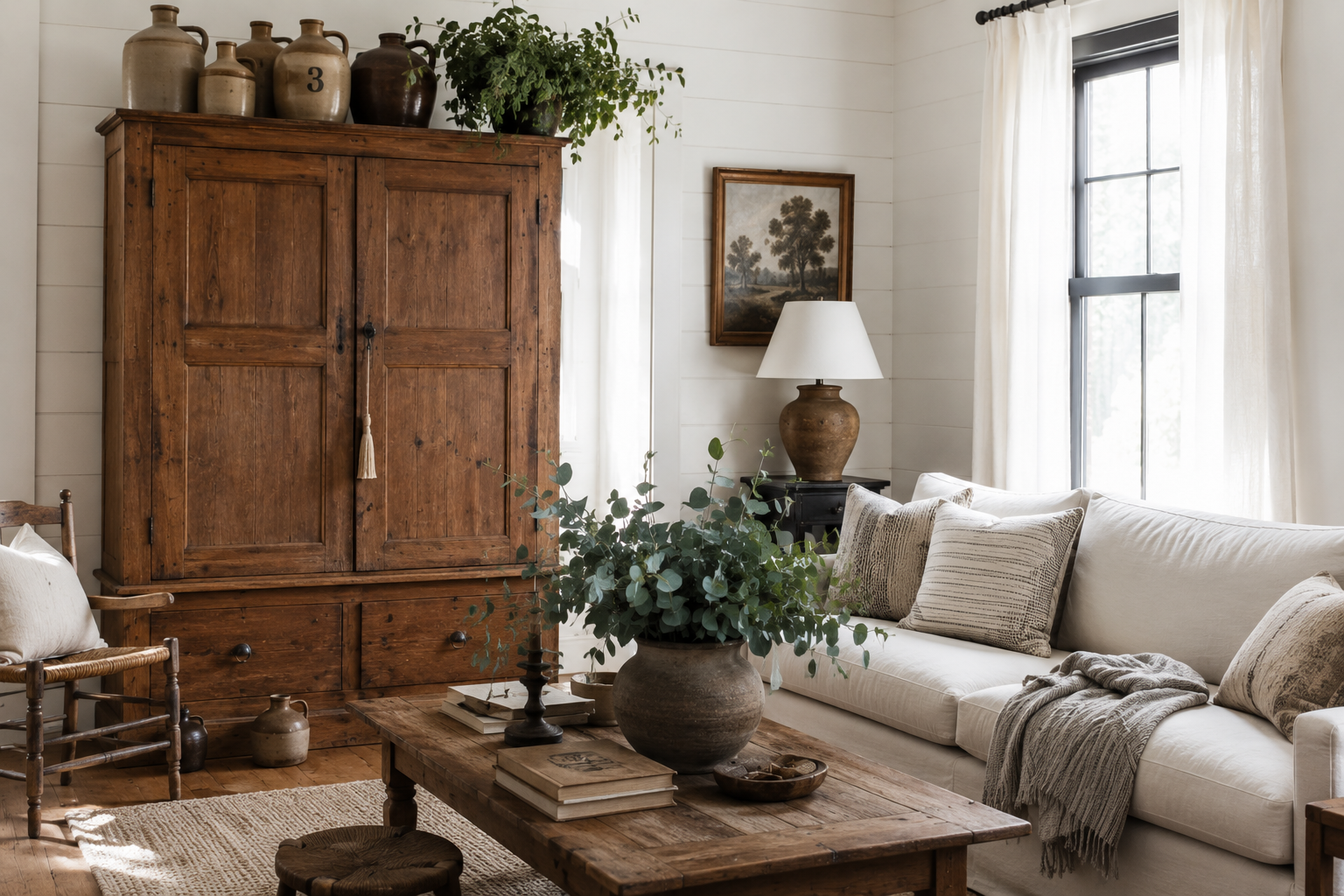
This combination feels effortless because farmhouse decorating evolved from the practical furniture and household objects used in early rural homes.
Instead of filling every corner with rustic décor, choose fewer, higher-quality antiques that have genuine age, craftsmanship, and character.
Consider incorporating pieces such as:
- Primitive pie safes
- Dry sinks
- Wooden blanket chests
- Handmade stools and benches
- Early cupboards
- Harvest tables
Pair these pieces with linen fabrics, painted walls, iron lighting, vintage crocks, and fresh greenery to create a home that feels collected over time instead of decorated all at once.
Primitive + Industrial
At first glance, primitive and industrial styles may seem like opposites, but together they can create a striking and comfortable space.
The warmth of antique wood balances cool metals, exposed brick, and darker architectural elements beautifully.
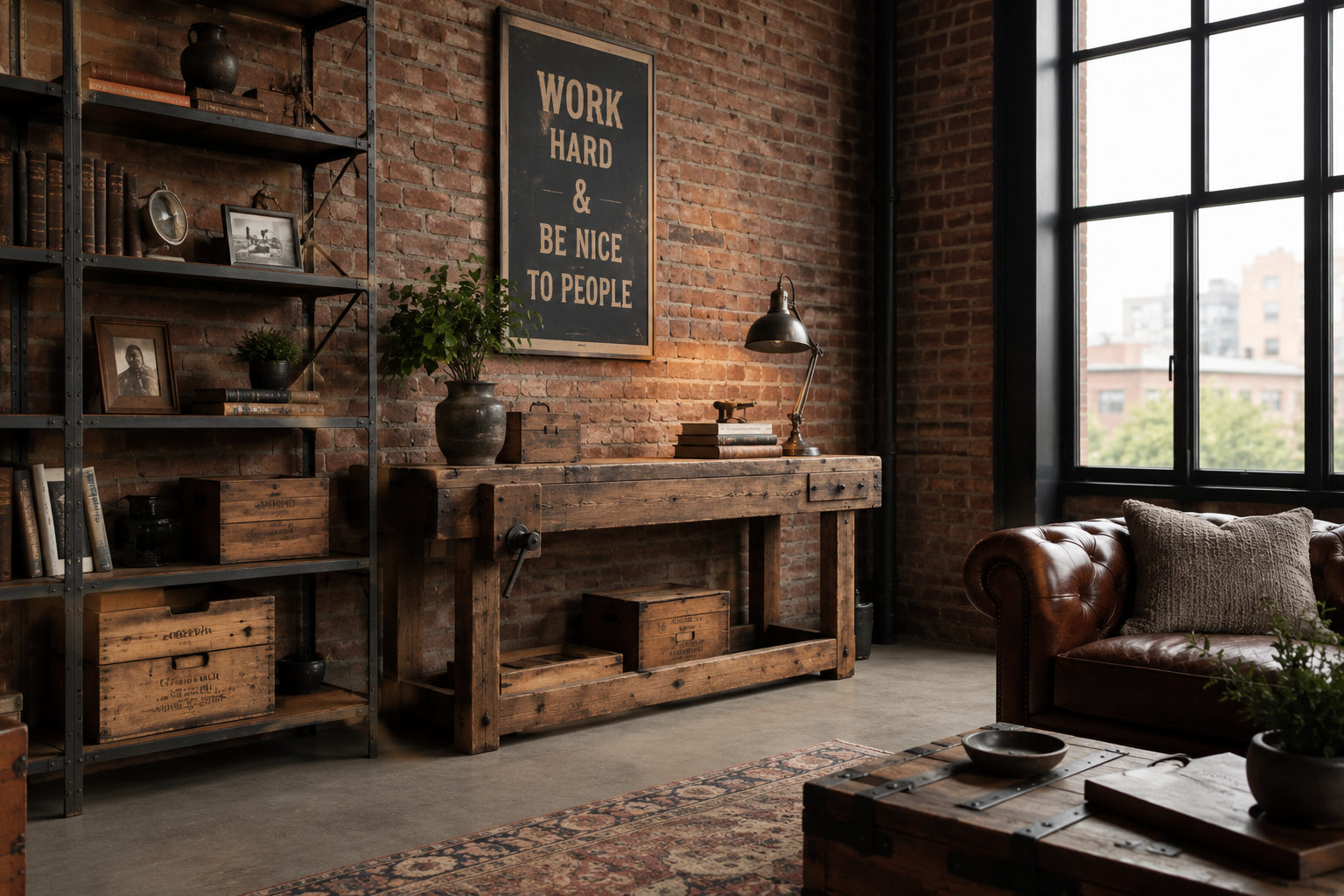
Try combining elements such as:
- A primitive workbench used as a console table
- An antique blanket chest used as a coffee table
- Black steel shelving
- Iron pendant lighting
- Exposed brick or concrete
- Leather seating
The result is an urban space with warmth, texture, and soul. Aged wood, steel, brick, and leather can complement one another rather than compete.
Primitive + Traditional
Traditional decorating emphasizes comfort, balance, and timeless elegance, making primitive furniture feel perfectly at home.
An antique primitive chest placed beneath a formal oil painting, or a primitive table incorporated into a classic dining room, adds depth and personality without making the room feel overly rustic.
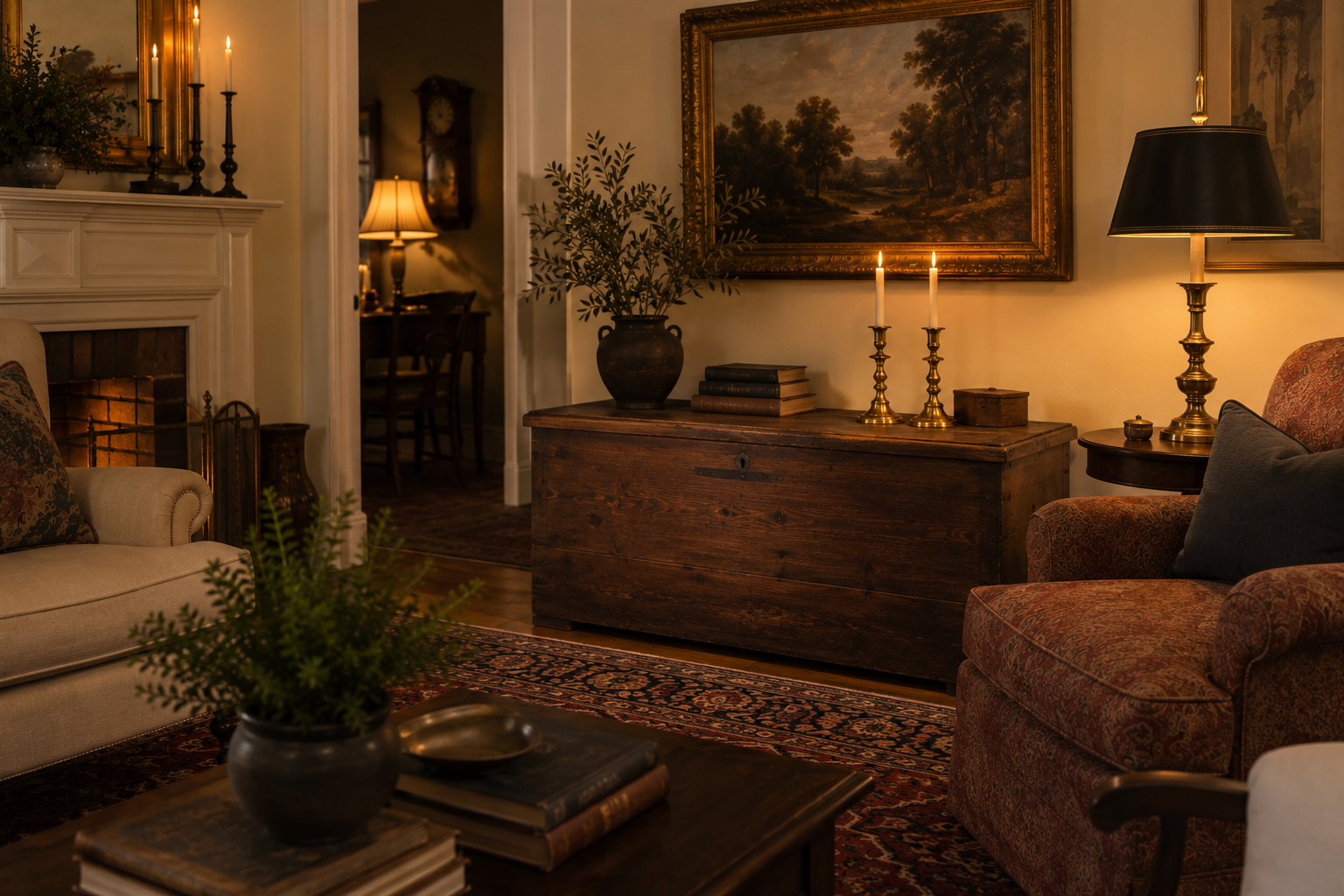
Layer the room with Persian or Oriental rugs, brass candlesticks, framed artwork, rich textiles, and classic upholstery. The result feels as though it has been collected over generations rather than purchased all at once.
Primitive + Eclectic
Eclectic decorating is about creating a home that reflects your personal story.
Primitive furniture can anchor a room while allowing vintage, global, modern, and artistic pieces to coexist.
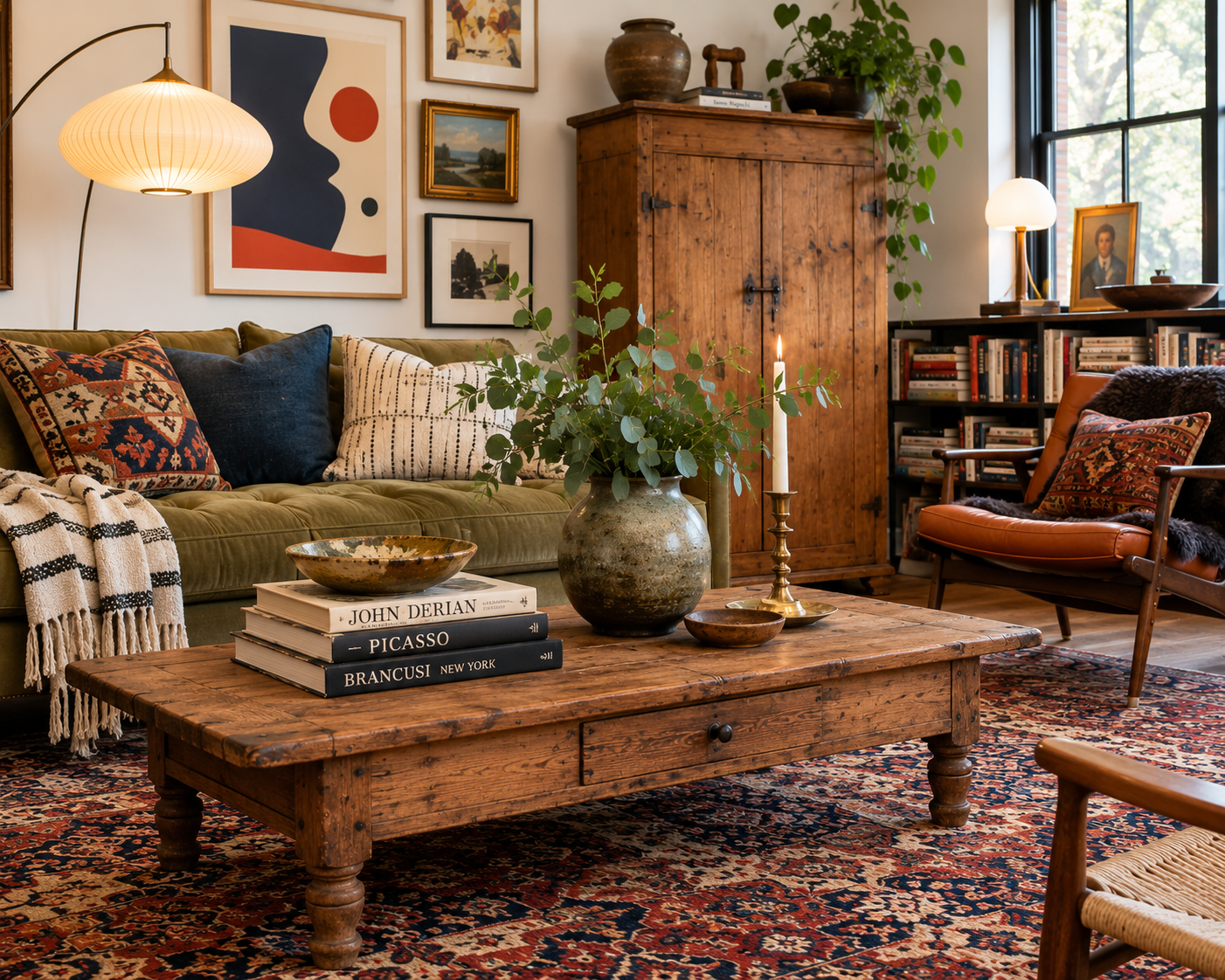
Consider mixing:
- Primitive pine tables
- Mid-century lamps
- Contemporary artwork
- Handmade pottery
- Vintage books
- Colorful textiles
- Collected objects from different eras
The key is balance. Choose one or two substantial primitive pieces to anchor the room, then build around them with artwork, lighting, and accessories that reflect your personal style.
Decorating Tips for Primitive Furniture
If you're just beginning to collect primitive furniture, start small. A single authentic piece can transform an entire room without overwhelming your existing décor.
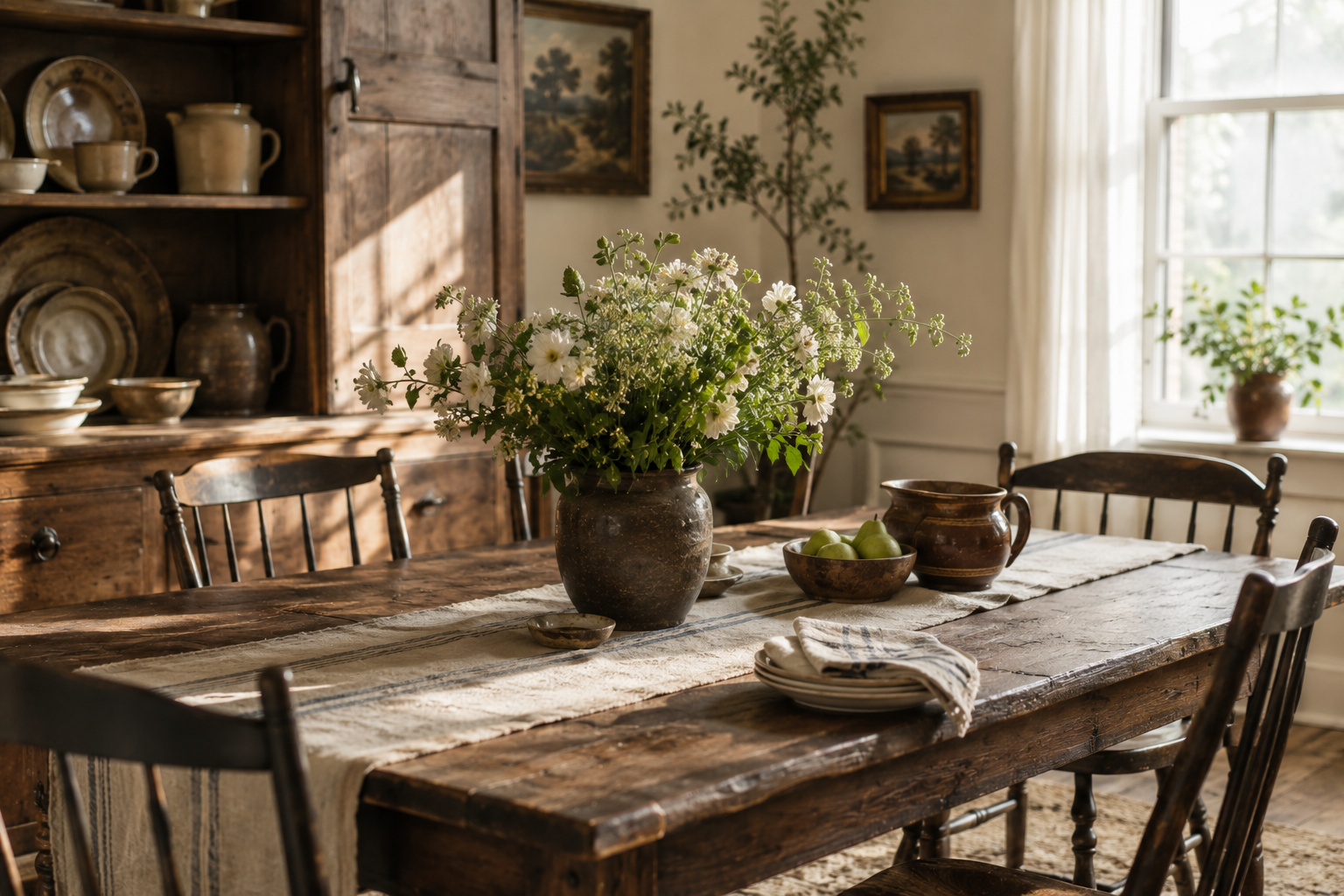
- Start with one statement piece. A primitive cupboard, harvest table, blanket chest, or bench can instantly add character.
- Let the wood speak. Avoid painting authentic antique surfaces unless restoration is necessary.
- Embrace imperfections. Scratches, wear, old repairs, and uneven surfaces are part of the story.
- Mix old with new. A room feels more natural and lived-in when antique pieces share space with modern comforts.
- Use antiques every day. Primitive furniture was built to be functional and can continue serving beautifully in today's homes.
- Avoid overdecorating. Give each piece enough visual space to be appreciated.
Why Primitive Furniture Continues to Grow in Popularity
As homeowners move away from disposable furniture, they are rediscovering the craftsmanship of earlier generations. Primitive furniture offers something increasingly rare: authenticity.
Every dent, worn edge, and hand-cut dovetail reflects decades—or even centuries—of daily life. Unlike mass-produced furniture, these pieces often develop more character over time instead of simply wearing out.
Primitive furniture also provides a sense of permanence. It connects a home to the past while remaining practical enough for modern living.
Whether you're furnishing a historic home, a downtown loft, or a newly built house, primitive furniture adds warmth, texture, and individuality. It has a remarkable ability to make a room feel more welcoming—and unmistakably personal.
Visit Middleton's Antiques, Books & Uniques
At Middleton's, we love helping customers discover antique furniture that fits their home—not just one decorating style. From primitive cupboards and harvest tables to blanket chests, benches, books, artwork, and handcrafted accessories, our inventory changes regularly with unique finds waiting for their next chapter.
Whether you're furnishing an entire room or searching for one special statement piece, we'd love to help you find something with history, craftsmanship, and lasting beauty.
Middleton's Antiques, Books & Uniques
1615 S. 17th Street
Lincoln, Nebraska
Hours
Wednesday–Friday: 11:00 AM–5:30 PM
Saturday–Sunday: 10:00 AM–4:00 PM
Stop in often—our inventory changes every week, and the perfect piece may be waiting for you.