Keeping Time: How Clocks Can Add Character, Ambiance and Charm to Any space, at Any Age.
From the steady rhythm of antique mechanical movements to the clean lines of vintage electric clocks, timekeeping has always been both functional and artful.
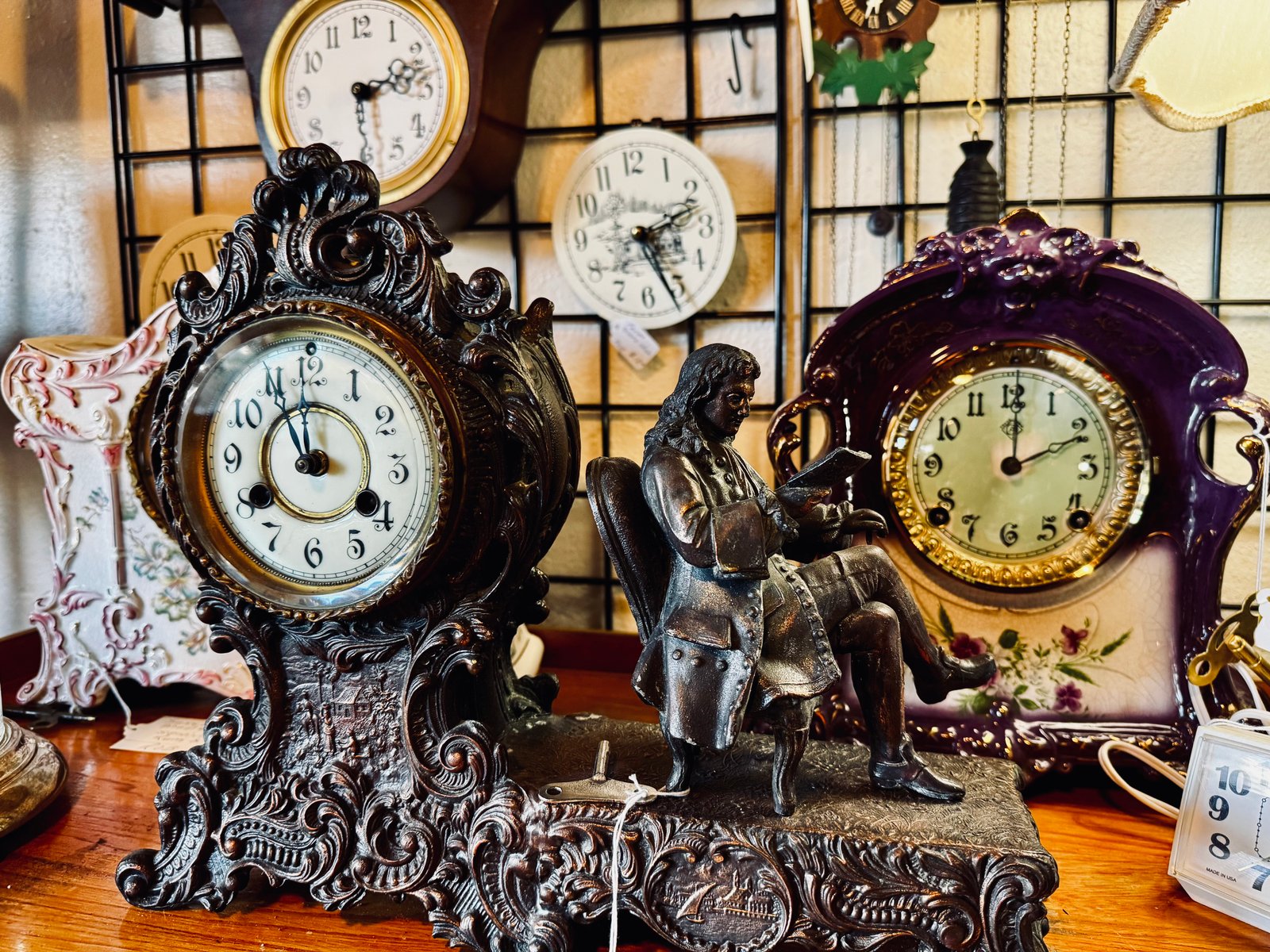
There’s something remarkable about a clock.
Unlike many antiques, clocks were never meant to sit still. They were built to move, to mark the passing of hours, to anchor daily routines, and to bring order to a world before digital screens and silent notifications. Every tick is a small act of engineering, craftsmanship, and patience.
At Middleton’s Antiques & Uniques, clocks are more than decorative objects. They’re living pieces of history.
When Time Was Mechanical
For centuries, clocks relied entirely on mechanical ingenuity. Weight-driven and spring-driven movements powered everything from tall case (grandfather) clocks to mantel and wall clocks found in homes, schools, and businesses.
Early mechanical clocks were works of precision long before mass manufacturing. Brass gears were cut by hand, pivots polished carefully, and escapements tuned to keep time as accurately as possible, often with nothing more than gravity and a wound spring as their power source.
By the 18th and 19th centuries, clockmaking flourished. American makers helped bring clocks into everyday homes, while European traditions emphasized ornate cases and refined movements. Oak, walnut, and mahogany cases weren’t just housing mechanisms, they were furniture, designed to last generations.
The Shift to Electric
The early 20th century brought a quiet revolution: electricity.
Electric clocks began appearing in homes and offices in the 1920s and 1930s, offering convenience without abandoning craftsmanship. Early electric movements still relied on gears and mechanical regulation, but used electric motors to keep them running.
Mid-century electric clocks embraced new styles, sleek lines, bold numerals, and modern materials, while still being built to last. Many vintage electric clocks remain serviceable today, a testament to thoughtful engineering and quality components.
Craftsmanship That Still Matters
What makes clocks exceptional is that they are repairable.
A well-made clock doesn’t have to be disposable. Gears can be cleaned, bushings replaced, movements adjusted, and cases restored. With proper care, a clock can outlive its original owner, and often several more after that.
This is where true clock knowledge becomes invaluable.
Meet Rob: Our Clock Specialist
Middleton’s is fortunate to work with Rob, one of our trusted vendors and a dedicated clock specialist. Rob doesn’t just sell clocks, he understands them.
His work reflects a deep respect for the craft. Each clock is carefully serviced, thoughtfully evaluated, and restored with the goal of preserving its integrity rather than over-modernizing it. Mechanical movements are cleaned and adjusted properly with attention to original components.
Whether the steady rhythm of a mechanical movement attract you, or the clean lines of a vintage electric clock catch your eye, the pieces Rob brings into Middleton’s are chosen and prepared with care. These are clocks meant to be used, enjoyed, and trusted, not just quietly admired from across the room.
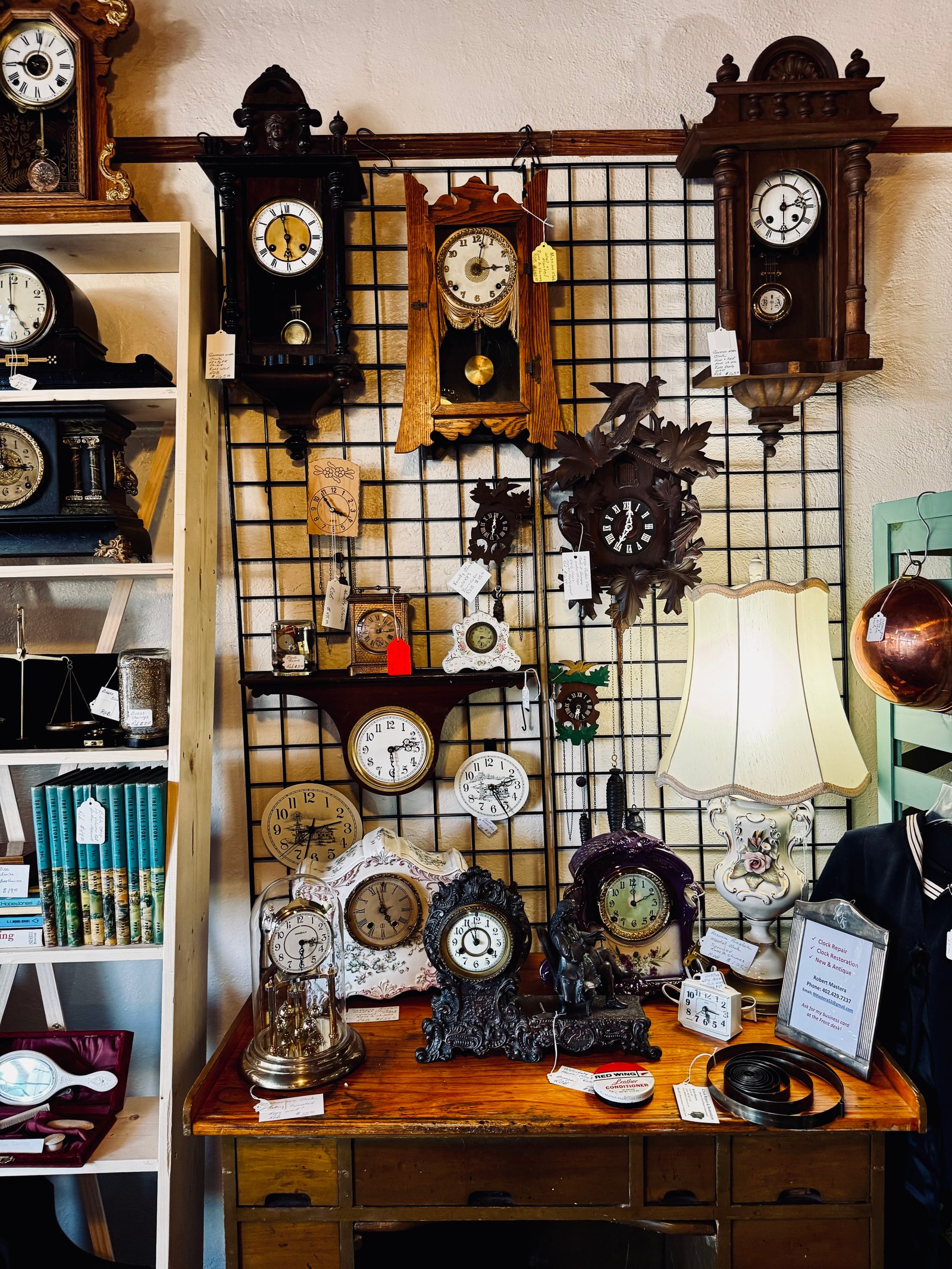
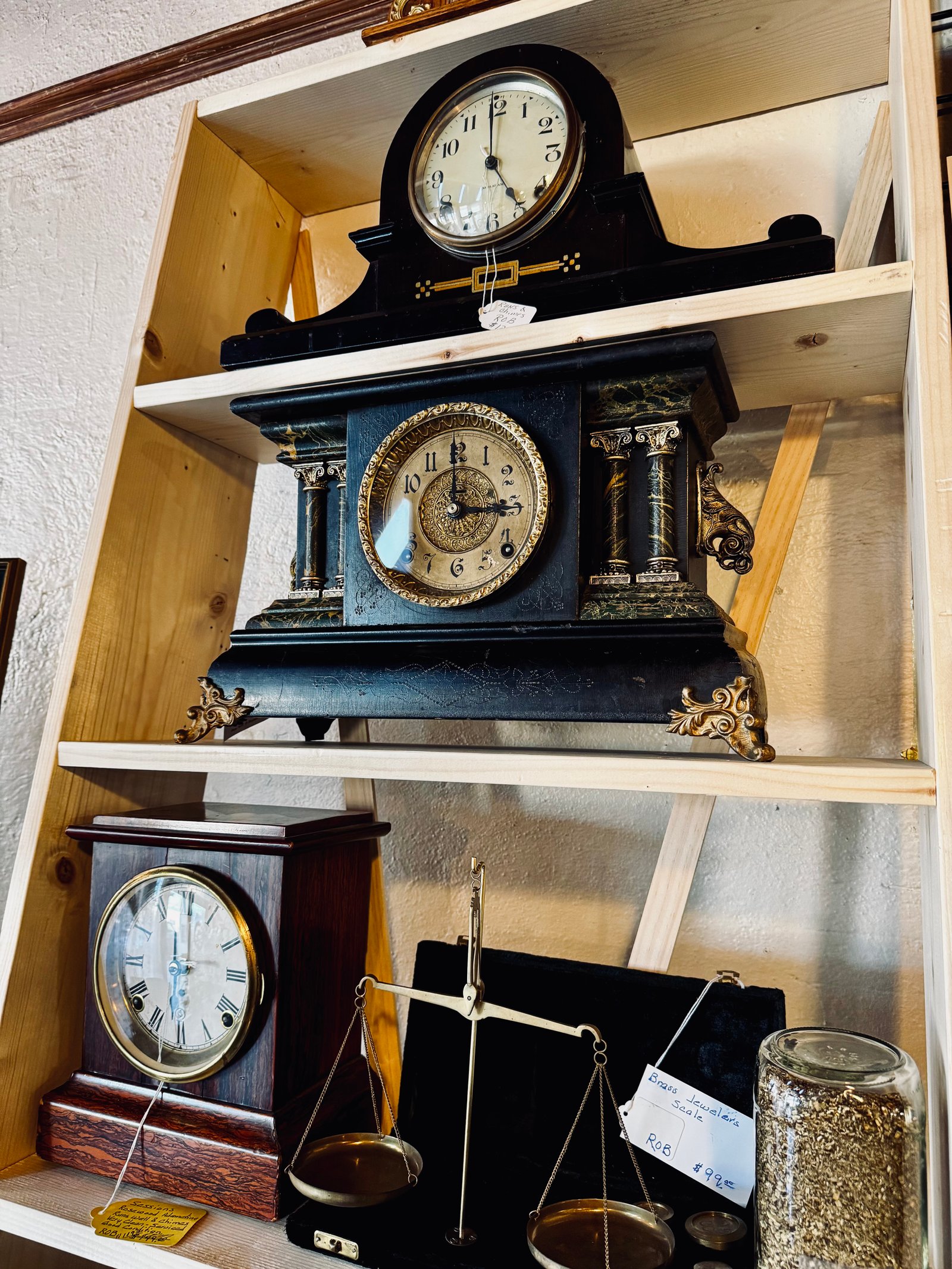
Rob's clocks on display at Middleton's.
Why Antique & Vintage Clocks Still Belong in Our Homes
In a world where time is mostly invisible, hidden behind glowing screens, there’s something grounding about a clock you can hear and see.
A ticking clock slows a room down. It reminds us that time is passing, but also that it’s meant to be lived in, not rushed through.
Antique and vintage clocks bring warmth, character, and intention into a space. They tell time, yes, but they also tell stories.
If you’re curious about adding a clock to your home, or if you have a piece that needs attention, stop by Middleton’s Antiques & Uniques. We’re always happy to talk clocks, craftsmanship, and the art of keeping time alive.